

Discover the power of greenery indoors!
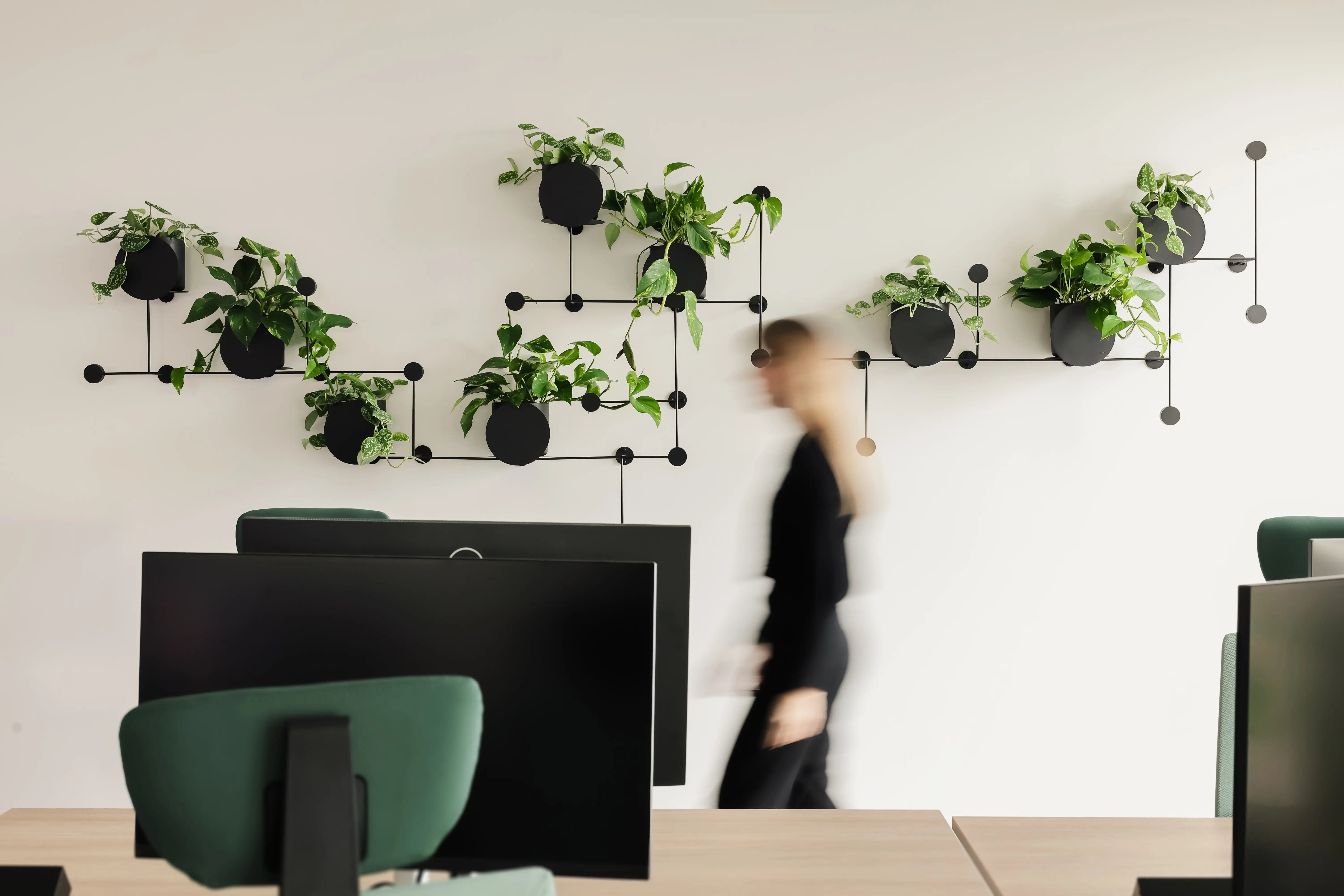
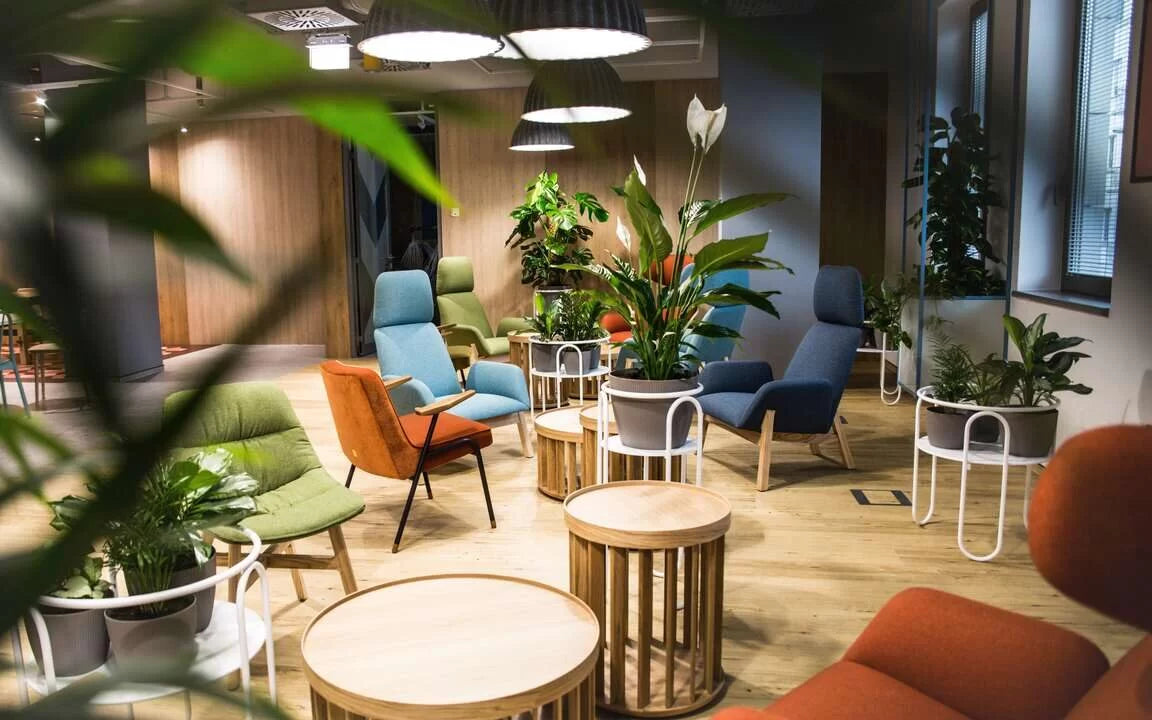
In public spaces such as offices, hotels, and restaurants, greenery is becoming an invaluable element of interior design, offering numerous benefits for employees, guests, and clients. Plant arrangements and biophilic design lend a cozy charm to interiors while improving air quality and increasing endorphin levels. Discover how greenery can transform your interiors and positively impact comfort and efficiency in our article.
Benefits of introducing greenery into offices, restaurants, and hotels:
1. Improved air quality
Plants have a significant impact on improving air quality in office spaces. They are primarily responsible for:
- Removing harmful chemicals: Plants can help remove harmful chemicals such as benzene, formaldehyde, toluene, and ammonia from the air in offices. For example, Ficus benjamina is known for effectively removing formaldehyde.
- Reducing carbon dioxide levels: Plants perform photosynthesis, absorbing carbon dioxide and releasing oxygen. This means that the presence of plants in the office can help lower CO2 levels, which is beneficial for air quality.
- Natural air filtration: Plants can act as natural air filters, helping to remove pollen, microorganisms, and other pollutants from office air.
- Impact on air humidity: Plants contribute to increased air humidity through transpiration, which can help maintain appropriate humidity levels in office spaces.
![[Opis zdjęcia]](https://cdn.shopify.com/s/files/1/0981/8036/6680/files/Bujnie_realizacje_ING_13_Easy-Resize.com_-edited.webp?v=1779092555)
2. Stress reduction and mood improvement by an average of 7-9%
The presence of plants indoors has a significant impact on people's mental and emotional health. Plants are a source of natural beauty and tranquility, which can positively affect people's well-being. Here are some ways in which indoor plants can contribute to stress reduction and mood improvement:
- Stress reduction: Plants can help remove harmful chemicals such as benzene, formaldehyde, toluene, and ammonia from the air in offices. For example, Ficus benjamina is known for effectively removing formaldehyde.
- Mood improvement: Plants perform photosynthesis, absorbing carbon dioxide and releasing oxygen. This means that the presence of plants in the office can help lower CO2 levels, which is beneficial for air quality.
- Sense of calm: Plants can act as natural air filters, helping to remove pollen, microorganisms, and other pollutants from office air.
- Contact with nature: Plants contribute to increased air humidity through transpiration, which can help maintain appropriate humidity levels in office spaces.
![[Opis zdjęcia]](https://cdn.shopify.com/s/files/1/0981/8036/6680/files/Bujnie_kwietnik_MOD_1.webp?v=1779093413)
3. Increased creativity by an average of 13%
The presence of greenery in the surroundings can significantly stimulate creativity. Studies and observations suggest that plants can stimulate the mind and inspiration, leading to increased creativity in people. Here are some ways in which plants contribute to boosting creativity:
- Stimulating the senses: Plants provide multi-sensory experiences, stimulating the senses of sight, touch, and smell. These stimuli can encourage people to think more creatively.
- Mood improvement: Many great artists, writers, and designers draw inspiration from nature. The presence of plants in the surroundings can help generate new ideas and projects.
- Sense of calm: Working in an environment with green vegetation can provide a break from the monotony of the office landscape. This change of scenery can lead to new perspectives and ideas.
- Contact with nature: Studies show that people working or spending time in environments with plants are more creative. For example, one study found a 13% increase in creativity among people working in rooms with plants compared to those working in environments without greenery.
![[Opis lewego zdjęcia]](https://cdn.shopify.com/s/files/1/0981/8036/6680/files/393520495_349384620843095_3205673809094133021_n_Easy-Resize.com_-1.webp?v=1779093814)
![[Opis prawego zdjęcia]](https://cdn.shopify.com/s/files/1/0981/8036/6680/files/393487834_3252107568421139_1170669942848240281_n_Easy-Resize.com_2f38cf3f-aafa-484e-afa6-6762716b9dfb.webp?v=1779093814)
4. Improved concentration and productivity by 15%
4. Improved concentration and productivity by 15% The presence of greenery in workplaces can significantly improve employee concentration and productivity. Plants act as natural noise filters and create a friendly environment that promotes focus on work or duties. Here are some ways plants improve concentration and increase productivity:
- Noise reduction: Plants can act as natural sound dampeners, absorbing unwanted sounds and helping to reduce noise levels in office spaces. This, in turn, promotes concentration and focus on tasks.
- Creating acoustic barriers: Placing plants in appropriate locations in rooms can help create acoustic barriers that separate spaces and help maintain privacy and tranquility.
- Impact on stress: Noise reduction due to the presence of plants can help reduce stress levels associated with bothersome sounds in the environment. Employees who work in quieter and calmer places are more concentrated and less stressed.
- Confirming research: Studies show that the presence of plants in offices can lead to increased employee productivity. In one experiment conducted by the University of Exeter, productivity increased by 15% in an office with plants compared to an office without greenery.
- Better working conditions : A friendly and aesthetic office environment that includes plants can affect employees' overall satisfaction with working conditions, which in turn promotes efficiency.
- Facilitating relaxation: Work breaks spent in the company of plants can help employees relax and unwind, which in turn affects their readiness for further work.
![[Opis zdjęcia]](https://cdn.shopify.com/s/files/1/0981/8036/6680/files/Zrzut-ekranu-2023-11-5-o-09.55.19_Easy-Resize.com.webp?v=1779094332)
5. Financial gain up to 23%
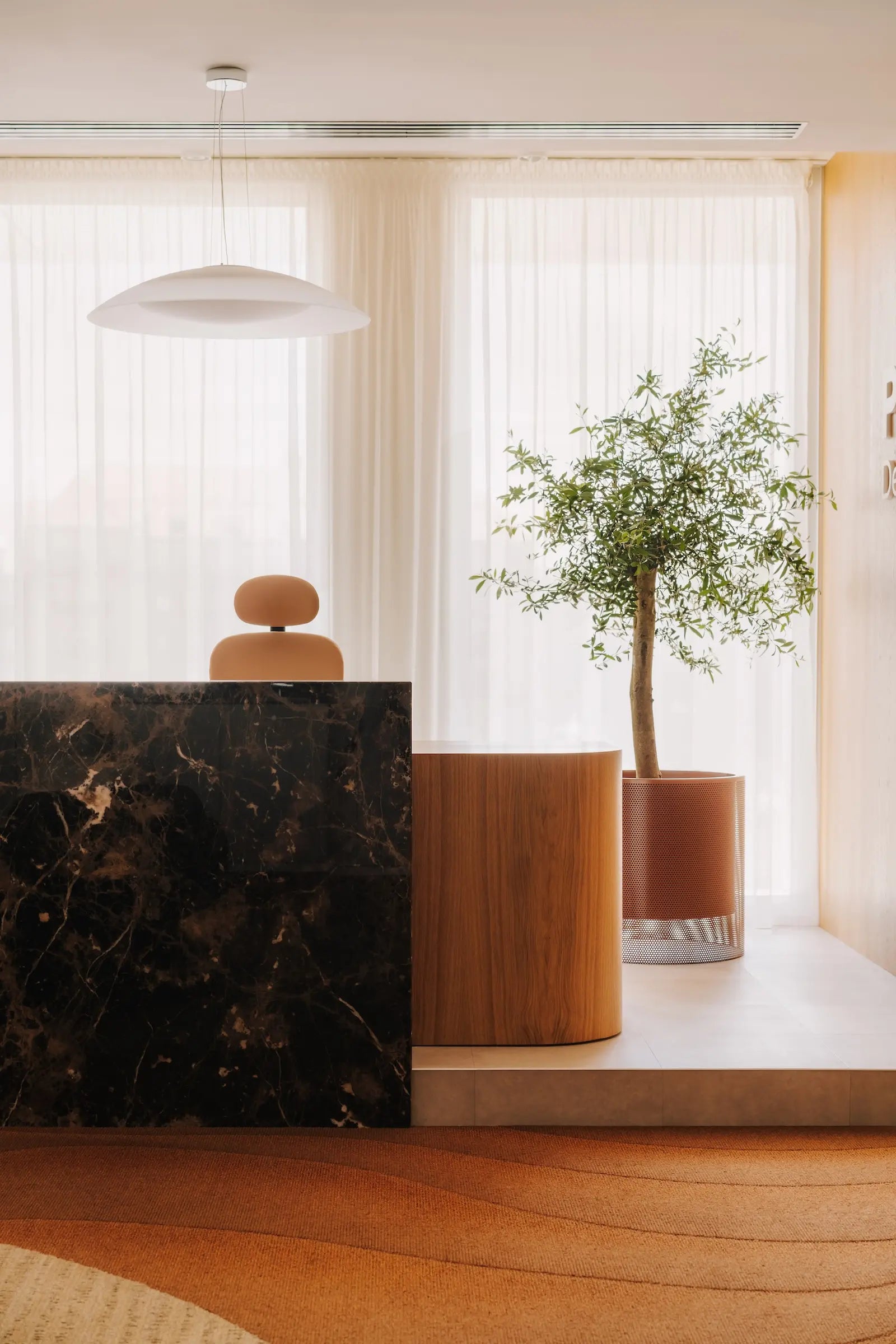
Designing restaurants and hotels in accordance with biophilic design principles and incorporating plants into their interiors can lead to significant financial gain by increasing the attractiveness and value of the offer. Here are some ways greenery and biophilic design can contribute to increased profits in the hotel and restaurant industry:
- Increased attractiveness:Plants and biophilic design elements create a friendly and relaxing environment, which attracts guests and makes the hotel a more appealing place to stay.
- Higher room rates: Studies show that hotel guests are willing to pay higher prices for rooms that include plants or biophilic design motifs. A 23% increase indicates that such an offer is valued by customers.
- Better reviews and ratings: A hotel or restaurant that prioritizes greenery and biophilic design elements can receive better guest reviews. Positive online reviews and ratings attract new customers and strengthen the establishment's reputation.
- Extended stays:A friendly environment with plants and biophilic design motifs can encourage guests to extend their stay, which translates into increased hotel revenue.
- Value and uniqueness: A hotel with unique decor and an environmentally friendly approach, such as biophilic design, can stand out in the market. This can attract customers who value originality and a sustainable approach to business.
- Positive impact on guests' health and well-being: Plants and biophilic design elements positively impact guests' health and well-being, which can lead to increased spending at the hotel, for example, in the restaurant or on additional services.
![[Opis lewego zdjęcia]](https://cdn.shopify.com/s/files/1/0981/8036/6680/files/migdal-razoo-27_instamigdal.studio_Easy-Resize.com.webp?v=1779094623)
![[Opis prawego zdjęcia]](https://cdn.shopify.com/s/files/1/0981/8036/6680/files/migdal-razoo-31_instamigdal.studio_Easy-Resize.com.webp?v=1779094623)
The presence of plants and biophilic design motifs in various environments, such as offices, residential interiors, and hotels, brings a range of benefits. Greenery not only improves air quality but also reduces stress, enhances mood and concentration, stimulates creativity, and generates financial profit. By using plants and biophilic design elements, a more friendly, inspiring, and productive environment can be created, attracting customers and increasing the value of the offering. It is worth considering these benefits and applying greenery in appropriate places to fully enjoy them.
For years, Bujnie has been encouraging and helping to bring greenery indoors. If you are looking for planters, furniture, or have your own idea for introducing greenery into interiors, please contact us!

Leave a comment
This site is protected by hCaptcha and the hCaptcha Privacy Policy and Terms of Service apply.