
[Answer or content — first paragraph]
Biophilic Design
This concept was popularized in 1984 by Edward O. Wilson, an American biologist and zoologist, and one of the fathers of modern sociobiology. He was awarded distinctions such as the National Medal of Science and two Pulitzer Prizes. In his concept, he described the unbreakable relationship between humans and nature, and highlighted the human need for constant contact with it.
![[Image description]](https://cdn.shopify.com/s/files/1/0981/8036/6680/files/f49052bb538083780b7b590d8b982632.jpg?v=1779107468)
His concept was proven by subsequent studies, including one in 2004, in which people were asked to describe their ideal city. Most respondents pointed to suburban areas with plenty of greenery. Similar studies indicated that people are willing to spend more money on apartments and houses with direct views of green spaces.
Humans feel better when close to nature than in an artificial, green-deprived urban environment.
However, how does this relate to another trend, which is constant urbanization? Statistics clearly show the outflow of people from rural to urban areas, and this has been happening over the last 60 years! Moreover, it is predicted that by 2030, nearly 60% of people worldwide will live in cities.
![[Image description]](https://cdn.shopify.com/s/files/1/0981/8036/6680/files/ImagicasaBiophilic-02.jpg?v=1779107742)
And now a challenge arises! How to maintain and not disrupt these inseparable bonds between humans and nature within the urban fabric?
The answer is biophilic design, a method of designing spaces that allows life and work to provide us with the true and deep satisfaction that stems from our need to be in contact with nature.
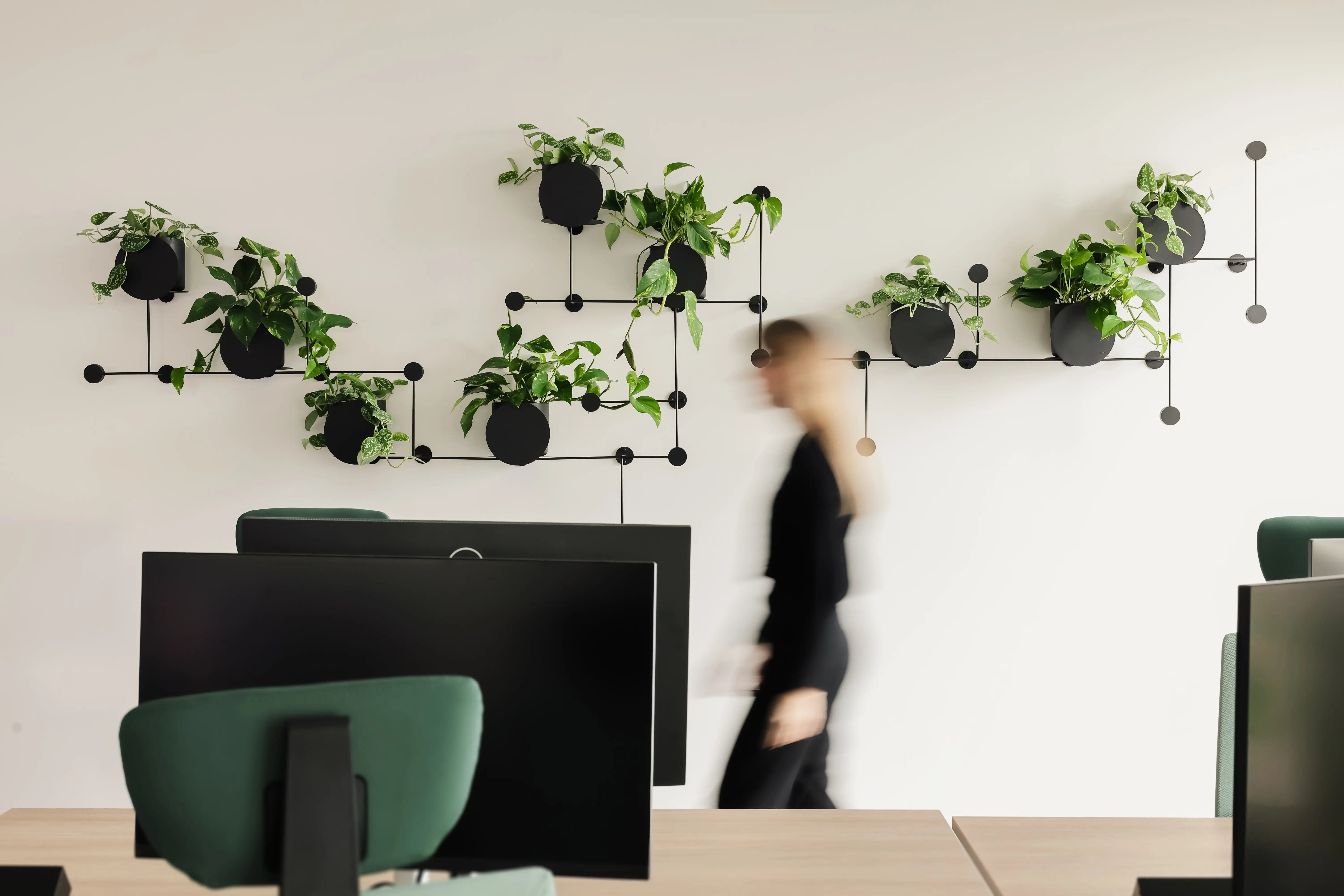
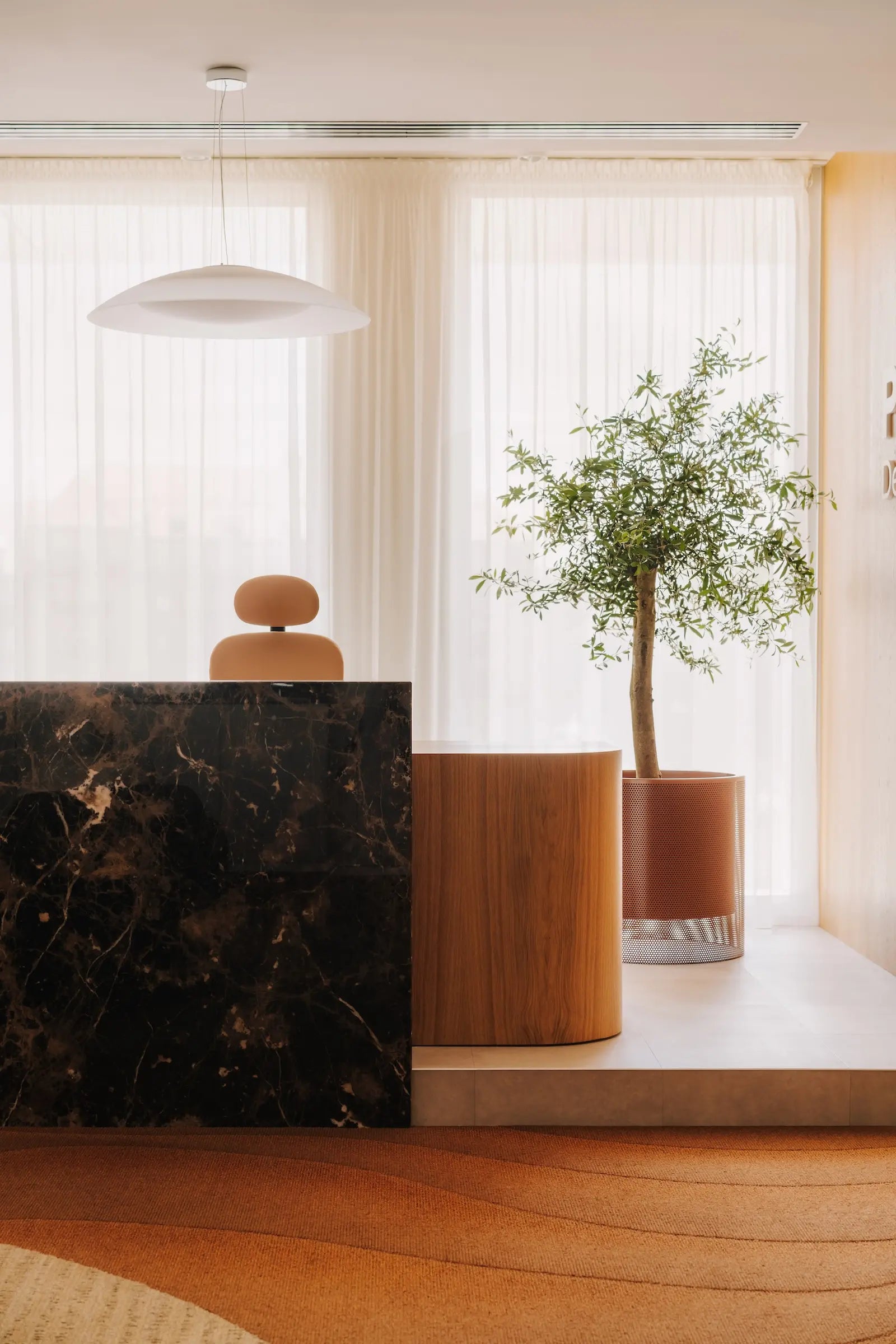
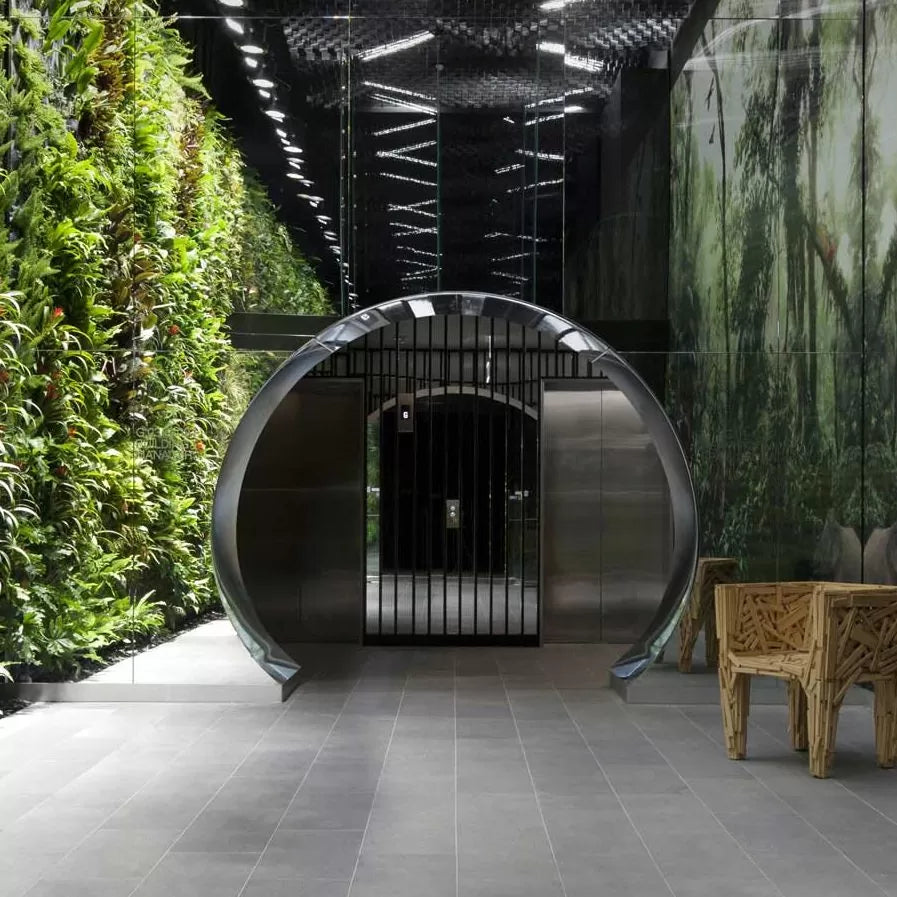
The responsibility lies with architects, urban planners, and designers to skillfully introduce nature into our concrete, urban deserts. There are many ways, including directly through the creation of green areas such as parks, squares, ponds, etc., as well as indirectly through appropriate interior design, introducing greenery, and elements associated with nature, such as light colors.
"Biophilic design is more than just introducing greenery into interiors. It's about creating strong bonds with nature on many levels. Starting from natural light, through views of nature from windows, plants in interiors, using natural materials, and ending with patterns and colors!"
![[Image description]](https://cdn.shopify.com/s/files/1/0981/8036/6680/files/91744e31082abf8230a9ad17210fc031.jpg?v=1779107918)
Biophilic design is more than creating a space where employees feel good. Emerging research proves the positive impact of this design method on the functioning of entire organizations, including increased life satisfaction, productivity, and creativity.
In subsequent posts, we will describe, among other things, how this method can increase company profits, how simple solutions can increase your and your employees' productivity, and how it looks in practice, i.e., Google in harmony with nature!
![[Image description]](https://cdn.shopify.com/s/files/1/0981/8036/6680/files/ImagicasaBiophilic-01.webp?v=1779107982)
If you want to stay up-to-date, follow us on:
And if you want to bring greenery into your interior, visit:
Sources
Wilson, E.O. (1984). Biophilia: The human bond with other species. Cambridge: Harvard University Press.
Kaplan, R. (1993). The role of nature in the context of the workplace. Landscape and Urban Planning, 26, 193-201.
Human Spaces: Report- Global Impact of Biophilic Design in the Workplace (2015), more information can be found at www.humanspaces.com

Leave a comment
This site is protected by hCaptcha and the hCaptcha Privacy Policy and Terms of Service apply.