
Leaf shapes as an effect of evolution – when nature designs better than us
About leaves, which are masterpieces of adaptation
![[Description of left photo]](https://cdn.shopify.com/s/files/1/0981/8036/6680/files/Kwietnik-Floos-Bujnie_1.webp?v=1778747471)
![[Description of right photo]](https://cdn.shopify.com/s/files/1/0981/8036/6680/files/rosliny-rzezba-GIF-2-1.gif?v=1778747470)
"Nature is the greatest designer. It never wastes energy on superfluous forms."
Have you ever wondered why greenery as sculpture has such a strong impact on our imagination and why nature designs better than any architect?
Leaves are not just decoration – they are precisely designed tools for survival. Their form results from function. From nature. From the need to adapt to extremely different environmental conditions.
Masterpieces of adaptation – from the tropics, deserts, and coasts
In the tropical undergrowth, where light penetrates through dense tree canopies, philodendrons have developed their survival strategy. Philodendron bipinnatifidum develops sprawling, jagged leaves – their "disheveled" form improves ventilation, increases the photosynthesis surface, and effectively drains rain.
![[Description of photo]](https://cdn.shopify.com/s/files/1/0981/8036/6680/files/pexels-claiton-1.jpg?v=1778748159)
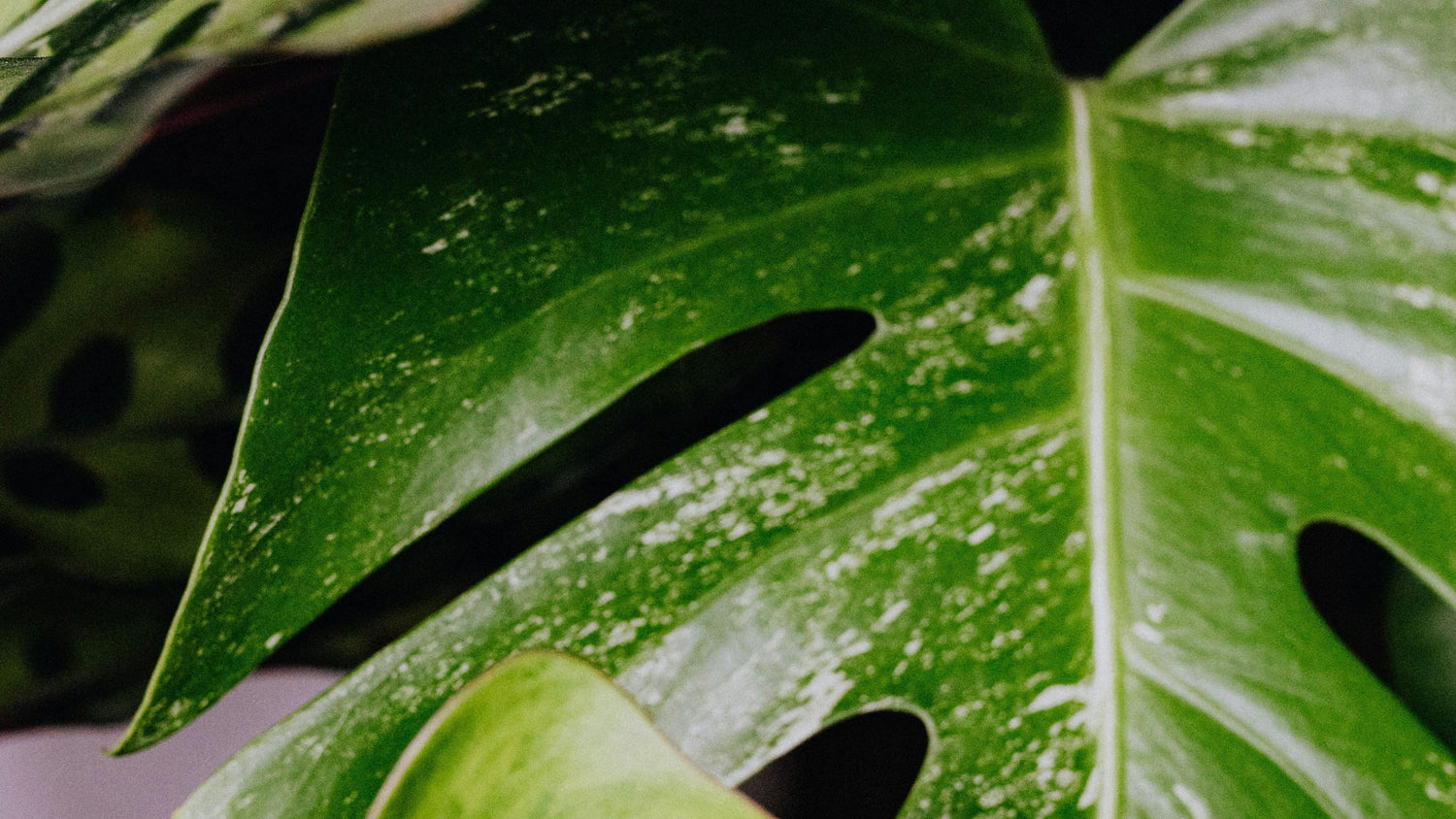
Monstera deliciosa also utilizes space – its characteristic holes are a way to survive in the shade and strong winds. Thanks to them, the plant lets light and rain pass through without losing its form. Greenery as sculpture – the leaf of Monstera deliciosa
![[Description of photo]](https://cdn.shopify.com/s/files/1/0981/8036/6680/files/rosliny-rzezby-2.gif?v=1778748424)
Desert plants, such as aloes or agaves… captivate with their form, making us perceive greenery as a sculpture created by nature itself. In turn, species from coasts and mountains – such as junipers – have developed hard, needle-like leaves, resistant to wind and drought. Every detail is the result of precise adaptation.
How to display greenery as sculpture indoors?
![[Description of photo]](https://cdn.shopify.com/s/files/1/0981/8036/6680/files/rosI__liny-pedet_ingage-1.webp?v=1778749010)
Some plants don't need background competition. Their leaves are the protagonists – so it's worth creating an appropriate stage for them. Indoors, they look best in arrangements that give them space and light – allowing them to play the main role.
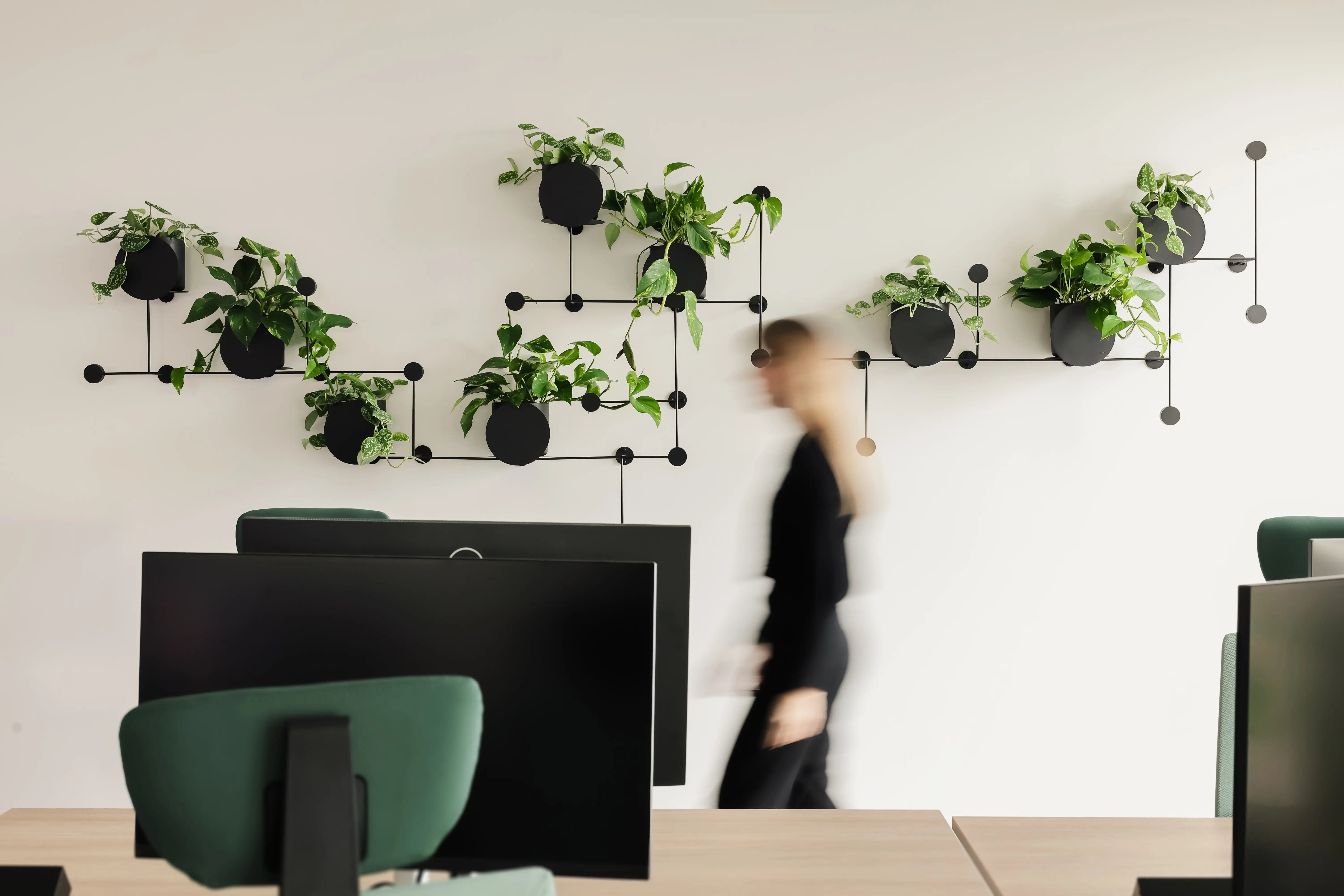
SU minimalist wall planter from Bujnie?
![[Description of photo]](https://cdn.shopify.com/s/files/1/0981/8036/6680/files/Bujnie-kwietniki-Su-biale_1.webp?v=1778749118)
SU – a minimalist wall planter that makes the leaf appear suspended in the air. The delicate structure does not dominate the composition – it is an ideal form for species with distinctive patterns, such as Philodendron bipinnatifidum or Philodendron billietiae.
See SUFLOOS
![[Description of photo]](https://cdn.shopify.com/s/files/1/0981/8036/6680/files/Bujnie-kwietnik-Floos-Rosliny-male-1.webp?v=1778749333)
FLOOS – a modular system that allows you to create rhythmic arrangements: from a single frame to spatial installations. You can start with one form and expand it as the plants grow. The openwork, graphic structure beautifully contrasts with the wild shapes of the leaves – it works well both for displaying a single species and in more complex green compositions that grow with the space.
See FLOOSBiophilia is not a cost – it's an investment with a triple-digit return. Treating greenery as sculpture is the foundation of modern design, where humans and nature regain a measurable connection. As leaders in the field of Biophilic Design, we provide global solutions that transform interiors into living ecosystems – from offices in Berlin to prestigious projects in New York.
The data is clear: nature-based design increases well-being by 15% and boosts creativity by nearly 15%. At Bujnie, we design frameworks for nature because we know that greenery as sculpture is not just a trend, but a global standard of Biophilic Design that increases the value of every project. It's a standard for architects who seek conscious, durable solutions ready for the challenges of the future.
Greenery is not just a color. It's a story of adaptation, rhythm, strategy, and beauty with a purpose.
And when we give it space to resonate – something more than decoration happens indoors. A relationship appears.
Visit us again – we'll tell you how to design a green wall and professionally treat greenery as sculpture in commercial projects.

Leave a comment
This site is protected by hCaptcha and the hCaptcha Privacy Policy and Terms of Service apply.